Intumescent mastic
The tube of sealant that does most of the small work, when it is used to its tested detail.
- Every seal labelled and photographed
- BM TRADA / FIRAS-certificated contractors
- Written price before any work
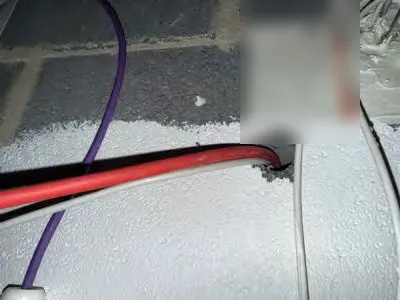
Intumescent mastic looks like ordinary decorator's caulk, usually white or grey, and it comes in the same kind of tube. In a fire it swells and chars, filling the gap it was put into and holding back flame and heat. It is used for the small stuff: the ring of space around a copper pipe, a single cable through a blockwork wall, the joint where a wall meets a slab, the edges of a fire batt.
It only works to its rating when it goes in the way it was tested. That usually means a set depth of mastic, often with a backing of mineral wool pushed into the gap first, and a maximum gap width. A 10mm gap round a 15mm copper pipe filled 25mm deep might be fine. A 60mm gap with a skin of mastic across the front is not, however neat it looks, and that is one of the most common things we see on surveys.
Acrylic intumescent mastic is the usual one for walls and floors. Silicone-based fire sealants are used where joints have to move. Some products are tested for one face of a wall only, some need sealing on both faces. The manufacturer's data sheet says which, and the contractor works from it, so ask to see it if you are paying for the work.
All the mastic work on our jobs in Reading is carried out by our BM TRADA / FIRAS-certificated contractors and recorded with a photo of each seal.
Send the postcode, the type of building and a photo of the gap with a tape measure in the shot. We reply with what it needs and a written price.